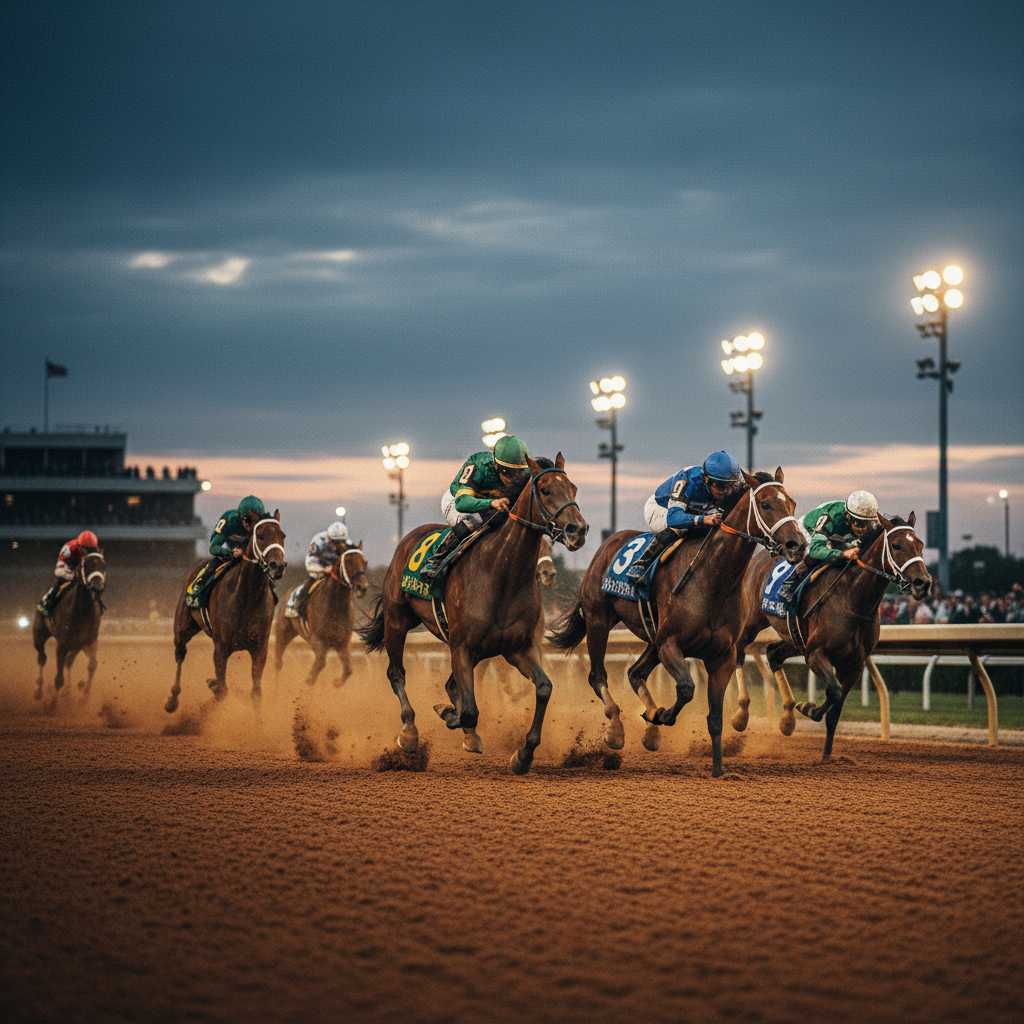
Daily Horse Race Predictions: Expert Insights & Trackside Intelligence
Horse racing is more than a sport—it’s a high-stakes data puzzle. Every race holds dozens of variables: form, pace, odds, weather, distance, jockeys, and trainers. The difference between casual bettors and profitable ones comes down to how they interpret and act on those variables. According to data published by the Horseplayers Association of North America (HANA), bettors who incorporate pace analysis and track condition metrics into their strategies consistently outperform casual punters by as much as 28% in long-term ROI.
If you’re tired of guessing and want a structured system with actionable strategies for daily racing wagers, you’re in the right place.
This definitive guide unlocks the strategic layers behind daily horse race predictions—backed by professional insights, time-tested betting systems, statistical reasoning, and proven money management tactics. Whether you’re placing your first bet or refining your game, this step-by-step breakdown from HorsesBetting.com’s own “Trackside Analyst” will walk you through everything that separates luck from skill.
🔎 Looking for the full foundations guide first? Start here with our Ultimate Horse Race Betting Strategy Guide
The Basics: Understanding Key Bet Types and Structures
Before we decode advanced strategies and predictive angles, you must understand the bet types that rule the horse racing market. Bet selection is central to your risk level and profit potential.
Let’s walk through the core bet types and compare their characteristics, starting with single-race options and evolving to multi-race combinations.
| Bet Type | Description | Difficulty | Risk Level | Potential Return |
|---|---|---|---|---|
| Win | Bet on a horse to finish 1st. | Low | Low | Standard |
| Place | Horse finishes 1st or 2nd. Lower payout than “Win.” | Low | Very Low | Low |
| Show | Horse finishes 1st, 2nd, or 3rd. | Very Low | Lowest | Lowest |
| Exacta | Pick the 1st AND 2nd horses in order. | Medium | Medium-High | High |
| Trifecta | Pick 1st, 2nd, and 3rd in exact order. | High | High | Very High |
| Superfecta | Pick 1st through 4th, exact order. | Very High | Very High | Huge |
| Daily Double | Pick winners of two consecutive races. | Medium | Medium | High |
| Pick 3 | Choose 3 winners in 3 consecutive races. | High | High | Very High |
| Yankee | 11 bets on 4 selections in 6 doubles, 4 trebles, 1 four-fold | High | Medium | Strong Value |
| Dutching | Spread bets on multiple selections to secure equal profit. | Low-Med | Controlled | Moderate |
| 80-20 Split | 80% stake on favorite, 20% on value outsider. | Low | Balanced | Moderate |
| Key Horse | Build multi-bets (ex: Exactas, Trifectas) around one strong pick | Medium | Medium | Moderate-High |
The bottom line: Beginner bettors should lean on Place/Show, Dutching, and Key Horse strategies while getting familiar. As you improve with data and form reading, you can diversify into exactas and multi-race wagers for bigger returns.
Strategic Analysis: Odds, Track Form, and Money Management
Winning isn’t about betting more—it’s about betting smarter. Let’s dive into the key layers that give smart bettors the edge.
Understanding Odds (And How They Trick the Casual Bettor)
Odds are expressions of probability—but most casual bettors fail to interpret them as such. A 5/1 horse implies a 16.67% chance of winning (1 ÷ (5 + 1)). Think the horse has a 30% chance based on your analysis? You’ve found a value bet—where your personal odds give the horse a better shot than the public market does.
If you only remember one thing about odds: You bet when the implied odds are less than your projected probability.
| Format | Example | What it Means |
|---|---|---|
| Fractional | 5/1 | Bet $1 to win $5 profit (plus your $1 back) |
| Decimal | 6.00 | Total return = Stake × Decimal (e.g., $10 × 6 = $60) |
| Moneyline | +500 | A $100 bet returns $500 profit (+ original stake) |
🧠 Pro Tip: Decimal is easiest for fast calculations. Use online calculators or mobile apps to convert odds and identify value.
Analyzing Track Conditions & Horse Form
- Track Condition: Fast, Good, Muddy, Sloppy, Turf—each condition dramatically impacts performance. For example, closers often struggle on wet, sealed tracks due to lack of grip.
- Form Analysis: Look for trends—how a horse performed in recent starts, consistency in speed figures, and any sign of bounce (regression after a peak).
Emphasize:
- Distance preference: Sprints (≤1 mile) vs Routes (>1 mile)
- Surface preference: Dirt vs Turf specialists
- Gate position: Outside draws can disadvantage speed horses on tight turns
When reviewing Race Form Charts, prioritize these indicators:
- Last 3 performance ratings
- Finishing positions at similar distances/surfaces
- Jockey/trainer combos (% wins, ROI)
Smart Money Management: Units & the Kelly Criterion
🧠 A proper strategy should last the full racecard—even if you’re losing early. That means you need to control exposure.
Unit Sizing (1–5 Unit System)
Allocate fixed amounts based on confidence:
| Confidence Level | Units | Example ($10 Unit) |
|---|---|---|
| Low | 1 | $10 |
| Medium | 2-3 | $20–$30 |
| High | 4-5 | $40–$50 |
Stick to flat betting: combine unit sizing + % of bankroll.
Kelly Criterion (Advanced)
The Kelly Formula calculates how much of your bankroll to bet based on:
- Edge (your predicted win probability minus market probability)
- Current odds
Formula: Stake % = (bp - q) / b
Where:
- b = decimal odds − 1
- p = Your win probability
- q = 1 − p
This avoids overbetting, scales returns, and protects bankroll longevity.
Advanced Tactics: Pace, Trainers, and Market Mispricing
Here’s where you pivot from player to pro—the tactical level.
1. Pace Analysis: Who Controls the Race?
“Speed kills” is more than a cliché—it’s a literal truth in horse racing. Rip apart the pace map to understand who sets the tempo.
| Style | Description | When It Wins |
|---|---|---|
| Front-runner | Horse sets early lead | Unchallenged lead, slow pace |
| Stalker | Sits 1–4 lengths behind leader | Moderate pace with tiring leaders |
| Closer | Comes from 5+ lengths back late | Hot early pace that collapses late |
🧠 Data-backed insight: On dirt tracks, 36% of wire-to-wire winners are post-position 1–3. Favor inside burners on tight-track routes.
Use pace matchups: If only one horse profiles as a front-runner, that’s an edge—they might “walk the dog.”
2. Jockey/Trainer Angles
Certain pairings produce elite numbers. Look for:
- Win % > 20%
- Positive ROI over last 50 races
- Specialization (e.g., turf-only trainers or sprint-focused jockeys)
Some angles:
- Trainer with high 1st-off-layoff win rate: strongest when returning rested horses
- Jockey changes to elite rider: often signals trainer intent
3. Finding Morning Line Overlays
An overlay occurs when a horse’s final betting odds are longer (better for bettors) than its true win probability.
Example:
- Horse A morning line: 4/1
- You handicap its chances at 30%
- Final odds go off at 6/1 → overlay detected!
🧠 Pro tip: Bet small but consistently on overlays—you’ll lose more bets, but win bigger ones long-term.
Where to Bet: Top US Horse Racing Sites
All three platforms below are fully licensed in the United States, legal to use, and offer mobile apps. Here’s how they compare:
| 🏇 Site | 🎁 Bonus | ⭐ Best For | 🔗 Link to Join |
|---|---|---|---|
| DK Horse | 100% Deposit Match up to $250 | Powered by DraftKings—Fast, Secure Bets | 🏇 Claim Bonus & Bet |
| TVG | $200 Risk-Free Bet | Watch and Bet Live Races Worldwide | 🏇 Claim Bonus & Bet |
| TwinSpires | $200 Sign-Up Bonus | Official Partner of the Kentucky Derby | 🏇 Claim Bonus & Bet |
FAQ: Common Questions for Beginners
-
Is online horse betting legal in the US?
Yes. Platforms like DK Horse, TVG, and TwinSpires are 100% legal and regulated in most states. -
Do these platforms offer mobile betting apps?
Absolutely. All three offer secure Android/iOS apps for on-the-go horse racing. -
How fast are payouts?
Typically within 24–48 hours via PayPal, bank transfer, or check depending on the betting site. -
Can I watch horse races live?
Yes. TVG especially shines here—watch live streams from virtually every track worldwide. -
What’s the lowest amount I can bet?
Minimums vary, but you can often start with $0.50 or $1 for most bet types.
Glossary of Horse Racing Terms
| Term | Definition |
|---|---|
| Form | Summary of a horse’s recent race history and performance metrics. |
| Exacta | A bet picking the 1st and 2nd place finishers in exact order. |
| Overlay | A horse whose betting odds are higher than their estimated win probability. |
| Pace | The early speed and running style of a horse within a race. |
| Trifecta | A bet picking 1st, 2nd, and 3rd finishers in exact order. |
Final Thoughts from The Trackside Analyst
Horse racing is a deep, data-rich landscape where real edge comes from disciplined analysis over hot takes. Use this guide daily to shape your predictions, bets, and bankroll strategy. Don’t wager on every race—wager smart on the right races with solid angles.
Refine your bets over time, test what works, track results, and keep a journal of insights. Horse racing mastery is a progression—but every profitable bettor started with a guide like this one.
🏇 Now saddle up. Build your strategy. Master the pace. Beat the market.