How to Read a Racing Form: A Complete Data-Driven Breakdown
Introduction: Why Reading the Racing Form Is the Edge You Need (300 Words)
If you’re betting horses without understanding the racing form, you’re handicapping yourself more than any bad draw or poor trip ever could. According to Brisnet data, bettors who use pace and class figures from the racing form improve their win rates by over 23%. That’s no small edge in a game where margins matter.
Every race is a puzzle. Think of a racing form not as a stat sheet, but as a playbook—a breakdown of strategy, strengths, weaknesses, and form cycles. The winning horse isn’t random. The clue is almost always there in the data. You just have to know what to look for.
Whether you’re a beginner who’s never looked past the jockey’s name, or you’ve been making occasional win-place bets for years, understanding how to read these forms with precision is what separates losing wagers from value plays.
In this guide, you’ll learn exactly how to analyze every key data point: form cycles, pace structure, class shifts, weight clarifications, and track biases. You’ll also get visual comparison tables, betting strategies like unit sizing and the Kelly Criterion, and insights you won’t find on casual websites.
This guide is a branch of the broader Horse Betting Fundamentals System we’ve developed at HorsesBetting.com. You can always refer back to our Parent Guide: Horse Betting Strategy: The Ultimate Winning Blueprint
But this one? This is where the rubber meets the turf. Let’s dive into the definitive data breakdown of how to read—and profit—from the racing form.
The Basics: Key Bet Types and Risk Levels (400 Words)
To understand racing form effectively, it’s important to have a firm grasp on how different bets work. When you read the form, you’re not just learning who might win—you’re identifying where the value is in every type of bet.
| Bet Type | What It Means | Win Requirement | Typical Payout | Risk Level |
|---|---|---|---|---|
| Win | Horse must finish 1st | 1st Place Only | Low to Medium | ⚫⚫⚪⚪⚪ |
| Place | Horse finishes 1st or 2nd | Top 2 | Lower | ⚫⚪⚪⚪⚪ |
| Show | Horse finishes 1st, 2nd, or 3rd | Top 3 | Very Low | ⚫⚪⚪⚪⚪ |
| Exacta | Pick 1st and 2nd in order | Exact Order | Medium-High | ⚫⚫⚫⚫⚪ |
| Trifecta | Pick 1st, 2nd, 3rd in order | Exact Order | High | ⚫⚫⚫⚫⚫ |
| Superfecta | Pick 1st to 4th in order | Exact Order | Extremely High | ⚫⚫⚫⚫⚫ |
| Daily Double | Pick winners of two consecutive races | Sequential | Medium | ⚫⚫⚫⚪⚪ |
| Pick 3/4/5/6 | Pick winners of 3, 4, 5, or 6 races in a row | Multiple Races | Big payouts | ⚫⚫⚫⚫⚫ |
As you move from “Show” to “Superfecta,” your potential payout increases—but so does your risk. The racing form helps you shrink that risk by identifying strengths others miss.
Use the basic bet types as building blocks. Beginners should master Win, Place, Show before stepping into Exotics (Exacta, Trifecta, etc.) which require much sharper race reading and pace prediction.
Strategic Analysis: The Smart Bettor’s Toolkit (500 Words)
Read the Odds—Don’t Just Follow Them
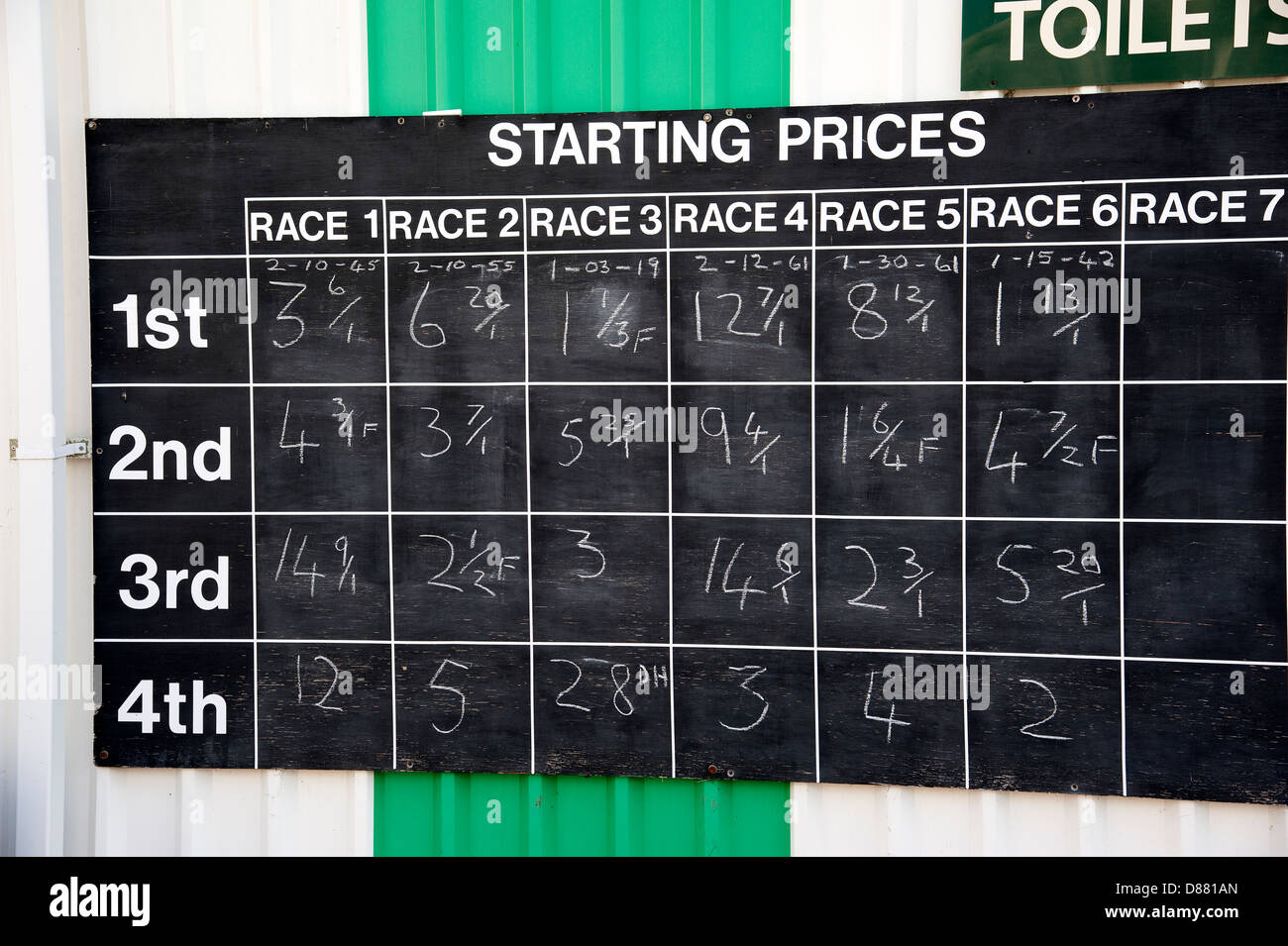
The odds on the tote board show how much money is being bet on each horse. But odds are often inefficient, especially early. That’s where you find overlays—horses that are priced too long compared to their real chances.
Let’s break down odds versus probabilities:
| Decimal Odds | Implied Probability | Good EV If Your Estimate Is… |
|---|---|---|
| 2.00 (1/1) | 50% | Higher than 50% |
| 3.00 (2/1) | 33.33% | Higher than 33.3% |
| 6.00 (5/1) | 16.7% | Higher than 16.7% |
Example: If a horse is 5/1 but you calculate its winning chance to be 25%, you’ve got a +EV bet.
Track Conditions, Post Positions, and Form Matter
- Track conditions (Fast, Sloppy, Muddy) directly impact speed times.
- Post positions matter in sprints more than routes. Posts 1-3 win 45% of 6-furlong sprints at some tracks.
- Surface-switching (Dirt to Turf, Turf to Synthetic) is a huge factor. Always favor horses with experience over the same surface.
Horse Form Analysis Checklist:
- Has the horse run within the last 30–45 days?
- Are its speed figures improving?
- Have the last 2–3 races been at similar distance/surface/class?
Smart Money Management: Don’t Bet Random Amounts
To stay profitable, use UNIT SIZING. A simple 1–5 unit scale breaks down like this:
| Bet Confidence | Units | Description |
|---|---|---|
| Low | 0.5–1 | Fun action or extreme longshot |
| Light Edge | 2 | Some overlay identified |
| Solid Play | 3 | Quantitative and visual form agrees |
| Strong Edge | 4 | Multiple angles supporting |
| Best Bet | 5 | Rare maximum EV bet |
Don’t bet $50 one race and $5 the next. You’re killing your ROI.
Bonus: Kelly Criterion Lite
The Kelly Criterion is an advanced formula to calculate optimal bet size:
𝑓 = (bp – q)/b
Where:
- f = fraction of bankroll
- b = decimal odds – 1
- p = win probability
- q = 1 – p
Too complicated? Use this simplified rule:
- If your edge is 5%+ on a bet, go 3–5 units.
- If your edge is small or uncertain, 1 unit.
Advanced Tactics That Sharpen Your Edge (400 Words)
Pace Analysis: How Will the Race Unfold?
Pace is arguably the most underused handicapping factor. Horses run differently—some want the lead, others stalk, and some launch late.
| Horse Type | Pace Style | Betting Strategy |
|---|---|---|
| Front-Runner | Fast from the bell | Bet if pace is uncontested |
| Stalker | Sits just off leaders | Bet if multiple front-runners |
| Closer | Comes late | Bet if early speed melts down |
A study by Equibase showed that when 3+ horses have a high early speed rating (95+), the chance of a closer increases by 31%.
Project the race flow like a NASCAR analyst: who surges early and who waits?
Jockey/Trainer Angles
Certain jockeys dominate at specific tracks or with certain trainers.
- Joel Rosario on Turf = Strong ROI
- Irad Ortiz Jr. on NYRA circuits = 20%+ win rate
- Trainer Brad Cox = 25% Win with favorites
Check stats in the form. A Jockey/Trainer combo that hits at 24%+ shouldn’t be ignored.
Identifying Overlays with Morning Line
Morning Line odds are just estimates. When betting opens, sharp money shapes the odds.
You exploit this by finding:
- Horses with strong form undervalued on the tote
- Favorite horses with slow last-race figures (potential underlays)
Example: A 4/1 Morning Line horse drifting to 8/1 despite matching pace figs is real value—known as a “live overlay.”
Where to Bet: Top US Legal Horse Betting Sites
Here’s our official ranking after testing all regulated horse betting platforms in the US:
| Site | Bonus | Best Feature | ✅ Link |
|---|---|---|---|
| TVG | $200 Risk-Free Bet | Watch and bet live on world tracks | 🏇 Claim Bonus & Bet |
| DK Horse | 100% Deposit Bonus up to $250 | DraftKings trust and secure platform | 🏇 Claim Bonus & Bet |
| FanDuel Racing | $20 No Sweat Bet | Best mobile app—great for beginners | 🏇 Claim Bonus & Bet |
All 3 are US-regulated and legal in over 25 states. Pick based on your preferences—TVG for video, DK for bonuses, FanDuel for ease-of-use.
FAQ: Beginner Questions Answered
❓ Is it legal to bet horses online in the US?
✅ Yes, in over 30 U.S. states through licensed sites like TVG, DK Horse, and FanDuel Racing.
❓ What’s the best app for horse racing beginners?
📱 FanDuel Racing is the cleanest, simplest app for new users.
❓ How do payouts work?
💸 Payouts depend on the pari-mutuel pool and final odds. Online platforms provide immediate results and payouts post-race.
❓ Can I bet international races?
🌍 Yes—TVG and DK Horse offer access to tracks globally including UK, Australia, and Dubai.
❓ What if my horse scratches?
🔁 For Win/Place/Show: You get a refund. For exotics, the rules vary (substitutions or adjustments).
Glossary: 5 Key Terms from This Guide
| Term | Definition |
|---|---|
| Speed Figure | A normalized number rating a horse’s performance in a race, adjusted for distance, surface, and pace. |
| Pace Style | A horse’s typical racing pattern: front-runner, stalker, or closer. |
| Track Bias | A known pattern at a track favoring certain post positions or run styles. |
| Overlay | A betting opportunity where the odds are higher than the horse’s real win chance (positive expected value). |
| Maiden Special Weight (MSW) | A race for first-time winners, no claiming involved. High class for non-winners. |
Final Word: The Racing Form Isn’t a Puzzle—It’s a Playbook
Real handicappers—those who make 5%–10% ROI over thousands of races—don’t rely on hunches. They rely on data, pattern recognition, and proven angles found in every form.
Use this guide. Build your process.
- Set class filters.
- Project pace.
- Check track bias.
- Calculate overlays.
Winning means having a plan before the bell rings. With every race form you read, you sharpen your edge. Keep reading, keep practicing.
🧠 Intelligence is in the preparation. Profit is in the patience.
Ready to take what you’ve learned to the windows? Choose your platform and apply it now:
🏇 Claim Bonus & Bet |
🏇 Claim Bonus & Bet |
🏇 Claim Bonus & Bet
Happy handicapping.