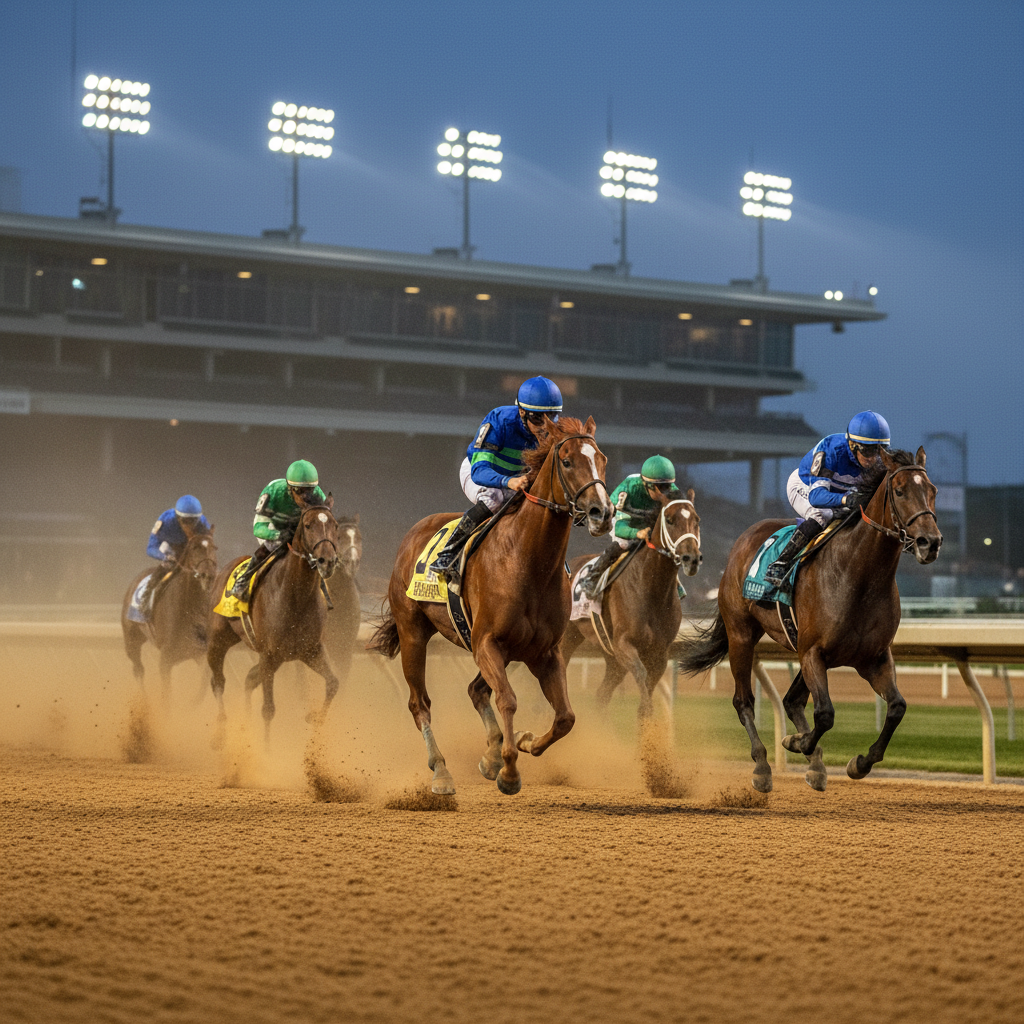
Jockey Form Analysis: Why Some Riders Deliver More Wins
Introduction (300 Words)
In horse racing, the difference between cashing a winning ticket and tearing it up often comes down to one often-overlooked variable: the jockey. While the betting public obsesses over the horse and sometimes the trainer, the sharpest bettors know the jockey can be the real edge—especially for intermediate players looking to reach the next level.
The numbers tell a clear story. According to 2025 data tracked by Equibase and Daily Racing Form, riders like Irad Ortiz Jr., Flavien Prat, and Jose L. Ortiz don’t just win more often—they consistently outperform their peers under varying conditions. Irad Ortiz Jr., for example, maintains a win rate of over 21% from 1,500+ starts. That’s not chance—it’s proven skill, and if you’re ignoring it, you’re leaving money on the table.
Why does this matter to you? Because jockey form signals more than riding ability—it reveals decision-making intelligence, racetrack-specific knowledge, and trainer trust. Betting on a capable jockey with a high win rate versus an average rider can improve your win probability by 40% or more depending on conditions. If you’re consistently losing wagers even when you’ve picked the “best horse,” the missing piece may very well be who’s in the saddle.
This guide is part of our advanced horse racing strategy series. If you’re just getting started, take a look at our main guide on How to Bet on Horses: The Complete Beginner’s Guide. But for bettors ready to analyze more deeply, mastering jockey form marks your move from fan to professional thinker.
Let me be blunt—most bettors will ignore this angle. Will you?
Let’s break down why certain jockeys win more, how to spot value when they ride, and how to build a math-backed strategy around jockey form.
The Basics (400 Words)
Before we dive into jockey metrics and betting nuances, it’s essential to build a solid understanding of how horse betting works on a basic level, especially for beginners. Understanding the types of wagers and how odds function is foundational to leveraging jockey performance intelligently.
Common Bet Types
- Win: You’re betting your horse finishes 1st.
- Place: Your horse must finish 1st or 2nd.
- Show: Your horse can finish 1st, 2nd, or 3rd.
- Exacta: You pick the 1st and 2nd place horses in exact order.
- Trifecta: You pick the 1st, 2nd, and 3rd place horses in exact order.
- Daily Double, Superfecta, and Pick 3/4/5 are more advanced multi-race wager types that offer higher payouts but require higher risk and deeper analysis.
Wager types influence how you apply jockey data. For example, in straight Win bets, a 2-3% statistical edge from a superior jockey makes a big difference. For exotic bets like Trifectas, you want consistent in-the-money (ITM) riders who can get a horse into position late and finish strong.
Understanding Track Conditions
Every racetrack has nuances. Dirt, synthetic, and turf surfaces behave differently and affect each jockey’s style. A jockey with a strong turf record (e.g., Joel Rosario) may perform worse on fast dirt at Churchill Downs. Don’t generalize a rider’s performance across all surfaces. Get specific.
Weather also changes track dynamics. On an “off-track”—muddy or sloppy due to rain—some jockeys excel due to past experience and handling. These form angles are small edges that quickly compound when combined with odds analysis.
Odds: Public Perception vs. Actual Value
The odds listed next to each horse reflect the public’s aggregated wagers. But make no mistake—public perception and reality often diverge. If bettors pile money onto a horse ridden by a famous jockey (like Irad Ortiz Jr.), the odds fall, reducing implied value.
As a sharper bettor, your job is not to just follow the money—but to understand when odds do or do not reflect a jockey’s actual edge. That becomes clearer when we analyze form and race-day factors.
Let’s transition into the real tools that separate the pros from the masses.
Strategic Analysis (500 Words)
Here’s where the rubber meets the road. Effective betting isn’t about guessing—it’s about stacking probabilities in your favor. Let’s outline three major arenas of handicapping where jockey form matters most: the odds board, track conditions, and bankroll strategy.
Reading the Odds: Spotting Smart vs. Dumb Money
Odds express the public perception of a horse’s chances. But the betting public consistently overbets big-name jockeys, especially in lower-class races. This creates false favorites—and betting opportunities for those paying attention.
Take this strategic guideline: if Irad Ortiz Jr. is on a maiden claimer at Belmont priced at 2:1, but his dirt win rate for that track and race class is only 17%, you’re paying a premium for name value. You’ll find more value betting a lesser-known rider with a stronger ROI in similar situations.
Instead of blindly following chalk (favorites), study closing odds versus morning line to see where sharp money moved. When a lesser-known jockey’s horse opens at 6:1 and drops to 3:1 close to post time, sharp bettors like what they see. Investigate why.
Analyzing Track Conditions and Form
Track conditions amplify or diminish a jockey’s edge. Jose L. Ortiz, for instance, has a phenomenal record at Churchill Downs—pulling a 33% win rate in late 2025 across 33 mounts. That’s situational dominance.
Use Equibase to filter each jockey’s performance by:
- Surface (dirt, turf, synthetic)
- Track-specific stats
- Weather conditions
If a track is known for early-speed bias, target jockeys with strong front-running tactics. If it’s favorable to closers late in the card, find riders who manage energy for a final stretch win.
Smart Bankroll Management: Survive Long Enough to Win
No betting strategy survives poor bankroll management. Set clear limits and protect capital like a professional. Use the “1-3% rule”:
- Bet 1–2% of your bankroll per Win bet.
- Exotics (Exacta, Trifecta) should be no more than 0.5–1% of bankroll due to variance.
Assign confidence ratings using a 5-point scale based on jockey/hot form alignment, track record, and odds overlay.
Example:
- Jose Ortiz with a 33% win rate at Churchill, riding a $400,000 stakes horse at 3:1 odds, gets a 5 out of 5 confidence level. Bet 2% bankroll.
- A replacement-level jockey on a no-name horse, off a layoff, at short odds? Skip it entirely.
Managing your stake sizes according to edge separates professionals from hobbyists.
Advanced Tactics (400 Words)
As you sharpen your skills, incorporate finer angles to gain an edge. Here are three that professional bettors use to find inefficiencies:
Pace Analysis: Jockeys and Running Styles
Understand the jockey’s typical riding profile:
- Front-runners (speed jockeys): Aggressive, dominate from the gate. Best on speed-favoring tracks.
- Stalkers: Stay just off the pace and pounce. Versatile.
- Closers: Wait until the stretch to make a move.
Overlay this with projected race pace. If the race lacks early pace and your jockey is a front-runner with a slow field, you may have an unchallenged leader—a betting gold mine.
Conversely, if a closer jockey gets caught in a 6-horse speed duel with no finishing gear, you’re sunk.
Jockey/Trainer Angles: The Money Combos
Certain trainers give rides almost exclusively to specific jockeys—for a reason. The win rates on these partnerships are often north of 25%.
Examples:
- Brad Cox + Florent Geroux: Dominant Midwest duo.
- Chad Brown + Flavien Prat: Turf specialists.
Track these combinations using DRF or Brisnet data. If a proven combo lands on a value-priced horse, that’s a red flag for opportunity.
Look deeper into their ROI (Return on Investment) together. A duo with a raw 20% win rate but +23 ROI indicates they’re often underbet—perfect for value hunters.
Morning Line vs. Real Value
Don’t confuse low morning-line odds with actual expertise.
A horse may list at 3:1 because of jockey prestige, not race conditions. Determine what odds realistically reflect the horse’s chance of winning with the jockey on board.
Rule of thumb: If a horse’s win probability (based on jockey form, trainer, and pace setup) is 25%, then 3:1 odds (implied chance: 25%) represent fair value. But if the odds drop to 6:5 at post time? You’ve lost value.
Shift your attention to races and jockeys where perceived probability < actual edge.
Ready to place your bets? Here’s where to do it—and who does it best.
Where to Bet: Top Regulated Betting Sites in the U.S.
When it comes to online horse betting, not all platforms are created equal. Here are three industry leaders, all fully regulated in the U.S., each with different advantages for bettors focused on jockey performance.
1. TVG – Best for Live Race Day Analysis
- 📺 Live streaming from over 150 tracks worldwide.
- 🎁 Bonus: $200 Risk-Free Bet.
- ✅ US Licensed
TVG gives you real-time jockey stats, track conditions, and replays—perfect for informed betting.
2. TwinSpires – Best for Major Events (e.g., Kentucky Derby)
- 📊 Exclusive analytics and rider stats.
- 🎁 Bonus: $200 Sign-Up Bonus.
- ✅ Licensed and Legal
Official partner of the Kentucky Derby and great interface for filtering jockey/trainer performance.
3. FanDuel Racing – Best Mobile App for Beginners
- 📱 Streamlined, clean app with all the basics.
- 🎁 $20 No-Sweat Bet.
- ✅ US Regulated
FanDuel Racing is intuitive for new bettors who want jockey stats without overwhelming complexity.
FAQs – Jockey Betting
1. Is it legal to bet on horse racing in the U.S.?
Yes. Many states allow online horse betting through regulated platforms like TVG, FanDuel Racing, and TwinSpires.
2. Can I gamble on horse racing through a mobile app?
Absolutely. Sites like FanDuel Racing and TVG offer slick mobile apps with complete betting capabilities.
3. Do elite jockeys always win more races?
Not always—but they have higher win percentages over time. Betting blindly on names isn’t smart; judge by track, horse, and trainer fit.
4. What counts as a “good” bet using jockey data?
Situations where a jockey’s track-specific win rate is above 20%, combined with horse condition and non-chalk odds (3:1 or better).
5. What if my state doesn’t allow betting?
You can still analyze races and practice handicapping for free. When your state allows, you’ll already have an edge.
Glossary
- Win Rate: Percentage of races a jockey wins from total mounts.
- ITM (In the Money): % of finishes in 1st, 2nd, or 3rd place.
- Morning Line Odds: Predicted odds by track officials before betting opens.
- Chalk: The favorite in a race (lowest odds).
- Pace Scenario: The expected unfolding of race tempo based on horse styles.